FORUMAMONTRES › Forums › Forum ROLEX (Non officiel) › les Rolex « prisonners of War »
- Ce sujet contient 10 réponses, 10 participants et a été mis à jour pour la dernière fois par
 thierryGMT, le il y a 17 années et 9 mois.
-
AuteurMessages
-
9 janvier 2009 à 5h55 #410000038267
 eamesimportMembre
suite au post de tony qui est illisible chez moi,
(ni la page en cours de traduction ne s’affiche, ni la page originale… )
je me permet d’ouvrir un sujet avec les infos que j’avais trouvé pour un post dans un bar voisin, directement lisibles, sans liens…

j’avais entendu parlé des Rolex POW (prisonners of War), dans un article au sujet des montres mythiques.
voici ce que donne une rapide recherche, trés interessant!Les Rolex « POW » : des montres de luxe pour des prisonniers de guerre
Antiquorum, la maison de ventes aux enchères spécialisée dans les montres de collection a proposé le 13 mai dernier à Genève de nombreux garde-temps exceptionnels dont deux chronographes Rolex 3525 expédiés à des prisonniers de guerre détenus en Pologne dans le Stalag Luft III durant la deuxième guerre mondiale. Revenons sur la fabuleuse histoire de ces montres historiques, notamment celle commandée par le caporal Clive Nutting.
Antiquorum, la maison de ventes aux enchères spécialisée dans les montres de collection a proposé le 13 mai dernier à Genève de nombreux garde-temps exceptionnels dont deux chronographes Rolex 3525 expédiés à des prisonniers de guerre détenus en Pologne dans le Stalag Luft III durant la deuxième guerre mondiale.
Revenons donc sur la fabuleuse histoire de ces montres historiques achetées par le caporal Clive Nutting et le major R.J. Henderson.
Ces montres ont été commandées à Rolex dans les années 40/41 par deux soldats, pendant qu’ils étaient retenus prisonniers au Stalag Luft III situé près de Bagan (actuelle Pologne). L’un était Canadien et l’autre, Clive James Nutting était un sujet britannique.
C’est plus spécifiquement de la montre de ce dernier dont nous allons parler… Le caporal Nutting a été capturé le 28 mai 1940 puis détenu au Stalag Luft III –celui-là même qui fut le théâtre de « La Grande Evasion » mise en scène par Hollywood en 1962. Clive Nutting a ainsi passé toute la guerre dans ce camp de prisonniers où il exerça le métier de cordonnier.

On ne sait pas trop comment les détenus faisaient pour choisir ces montres qui étaient principalement acquises par des officiers, « probablement à cause de leur prix » souligne Antiquorum.
Toujours est-il que de nombreux documents d’époque montrent que Rolex fournissait régulièrement des montres aux POW (Prisonners Of War en anglais) lors de la seconde guerre mondiale. Même si cette pratique était probablement limitée à certains camps tel que le fameux Stalag Luft III.
A l’époque, la fourniture de ces garde-temps auprès des POW était une opération financière pour le moins risquée. En effet, le fabricant adressait ses montres gracieusement à ses clients gradés, considérant qu’un officier, en véritable « gentleman » ne manquerait pas de régler sa facture après sa libération.
C’est ainsi qu’Hans Wilsdorf, horloger de nationalité allemande installée à Genève depuis 1919 pour des raisons fiscales participa à sa manière à l’effort de guerre. « Mais cette action permettait également à Rolex de tester ses montres dans des conditions extrêmes » précise Antiquorum. D’ailleurs, dans ses correspondances avec ses clients, la marque genevoise demandait souvent des informations quant au fonctionnement de ses "Oyster".
Plus concrètement, la Rolex 3525 Oyster Chronographe en acier inoxydable de Clive Nutting a été commandée le 10 mars 1943. Lorsque que Rolex a reçu l’ordre d’achat de ce Chronographe Oyster No. 122 de la part du caporal Clive Nutting (prisonnier 738), la direction de la marque genevoise a souligné « un inévitable délai dans la fabrication de cette pièce, non pas à cause des conditions de guerre ou des restrictions, mais à cause d’un grand nombre de commandes de la part des officiers » qui bénéficiaient alors de l’offre « achetez maintenant et payez quand vous le pourrez ».

La montre a probablement été envoyée le 10 juillet accompagnée d’une facture portant la mention « gratuit ». « La montre coûte actuellement 250 francs en Suisse mais ne vous préoccupez pas de payer pendant la durée de la guerre », écrivait alors à son client le fondateur de Rolex, Hans Wilsdorf, en soulignant la deuxième partie de la phrase.
Clive Nutting a été relâché le 28 mai 1945. A son retour en Grande-Bretagne, le caporal écrit à Rolex pour réclamer sa facture et demander l’adresse d’un horloger où faire régler sa montre qui prend une heure par jour « mais qui a bien résisté au froid » précise-t-il.
Ce n’est que trois ans après la guerre, en 1948, que M. Nutting recevra enfin une facture de Genève d’un montant 15 livres, 12 shillings et six pence. Il conservera sa montre jusqu’à sa mort en Australie en 2001, à l’âge de 90 ans. Elle fut ensuite achetée aux enchères par un Australien pour le tiers de son estimation actuelle, selon Antiquorum.
Le dernier "enregistrement" de la montre POW de Clive Nutting dans les archives date du 28 mars 2003. Il s’agissait d’une révision pour un montant de 2.356 dollars australiens… 63 ans après que son propriétaire d’origine devienne prisonnier de guerre.
et la suite, en anglais! …
The "Prisoner of War" watches from Rolex
 Write Time Partners V, 2000
The story of the Rolex “Prisoner of War” watches is a fascinating one, but a story that has become almost a legend in its retelling. I will, in this short article, try and separate legend from truth and set down the known and independently verifiable facts.
Firstly, the legend; if you were an allied prisoner of war captured by the Germans during World War II, you could write to Rolex, Geneva and they would send a watch to you free of charge.
The reality is only a little different, it seems that this service was only available for British prisoners and not for the French, American or other allies. The letter would be sent to Rolex from the camp via the International Red Cross, who (like Rolex) was headquartered in Geneva. Hans Wilsdorf himself, who wrote a letter that accompanied every watch dispatched to a P.O.W, ran the administration of this programme.
As stated in the first letter, the recipients were expected to pay for their watches in Swiss Francs at the end of the war. However due to economic situation at the end of the war, it was often 1947 or 1948 before foreign exchange resources were available to meet the bills.

The first letter is to a senior officer in the RAF, who is now a guest of the German Air Force. This was because one of the stranger German habits during WWII was that each service ran its own prison camps “catering” to prisoners from the opposing service. This all can be gained from the address “Stalag Luft 3”, Stalag, meaning “prisoner of war camp” and Luft being short for “Luftwaffe” or Air Force.
The interesting thing about the letter (other than the fact that Hans Wilsdorf wrote it himself) is what was included with the watch, as listed at the bottom of the page. There was an invoice, the instruction book and the guarantee card but also included was the official chronometer-rating certificate. I suppose as Wing Commander Trumble would have some time on his hands, at least he could now measure it accurately.
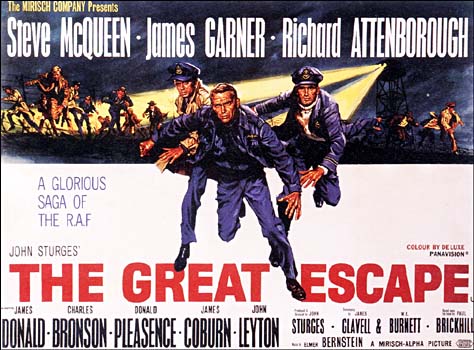
The camp Stalag Luft 3 may mean nothing to most of you but if you have ever read the book by Paul Brickhill or the movie (roughly based on it) both called “The Great Escape”; you will know something of it.
The second letter is the most interesting; as it is a personal letter from Hans Wilsdorf to the parents of a British Officer taken prisoner, most likely during the fall of France. Note what Wilsdorf says in the letter “We are looking after his wants in the same way as for some other British Officers, who are also prisoners in the same camp. Please rest assured that we will do everything in our power to obtain food or other articles…”
There are a number of questions about this letter. Why is Wilsdorf writing to the family with this important information? Isn’t this the job of the Red Cross? He also offers the firm’s services as a communication conduit, once again normally the job of the Red Cross.
I have no proof for it but my gut feeling tells me that the subject of the letter “Grahame” may well have been a Rolex employee before the war. And, as he is an officer (note that he is in an “Oflag” or Officer’s camp) was most probably of managerial status and would then have known Wilsdorf. This may also explains why Wilsdorf always calls Grahame, not Captain Smith (or whatever his name may have been). Lending further credence to my theory is the fact that almost every POW Rolex I have seen was a boy’s size Speedking. However the watch that was sent to Grahame was a reference 3525 Oyster chronograph, one of the most expensive watches in the Rolex catalogue at that time.
Note Wilsdorf’s PS is in his handwriting and is further evidence of a personal relationship between Wilsdorf & Grahame.

The reason the British Prisoners of War needed a new watch was that most of them would have had their own (or government issue) wristwatches confiscated when they were captured. Whilst some of this was simple looting, the main reason the Germans did this was that they knew that RAF officers were normally given escape & evasion kits by the RAF. Examples of this were needles in sewing kits which were magnetized to act as compass needles and maps printed on silk concealed in the heel of a flying boot. There was even a special section of British Military Intelligence (MI9), specially dedicated to getting escaped prisoners & downed aircrew back to the UK. The logic behind all this was that every escaped prisoner tied down hundreds of German troops and police drawing them from offensive operations against the allies.
9 janvier 2009 à 5h58 #420000612923 corleoneMembre
Très instructif, merci.
 9 janvier 2009 à 6h04 #420000612924eamesimportMembre
j’ai oublié les crédits…

1° partie > montres-de-luxe.com
2° partie (en anglais) > ukwatches.com9 janvier 2009 à 6h13 #420000612925 depuis1899Membre
Merci pour cette intéressante info
 _________________
The truth is out there9 janvier 2009 à 6h24 #420000612926 gautierMembre
Belle histoire que je ne connaissais pas
9 janvier 2009 à 6h30 #420000612927eamesimportMembre3° partie
(crédit > timezone.com
)
Clive Nutting’s POW Stalag Luft III Watch” – lot 311
A Treasure of Unpublished POW Mementoes

During his five-year captivity, Clive “Nobby” Nutting kept a war log filled with drawings, cartoons and photographs depicting life in World War II’s most famous prisoner-of-war camp, Stalag Luft III — scene of the Great Escape.
He starts his scrapbook book with a coloured drawing that sums up his time in action prior to his capture on March 28, 1940, south of Dunkirk. It shows him clinging desperately to a damaged telegraph pole, trying to establish communications as bombs and shells rain down on a battle-torn landscape. A “Stuka” dive-bomber hovers menacingly overhead.
Nutting had joined the Royal Corps of Signals — the army’s communications engineers — in 1935, as a part-time soldier in the reservist Territorial Army.
By April 1940, Corporal Nutting was in France with the 44th Territorial division, part of the British Expeditionary Force (BEF) guarding the border with Belgium. On March 10, the Germans attacked, splitting the French armies, encircling the BEF, and forcing it in a tighter pocket around Dunkirk — the only port of evacuation.
On March 28, the Germans overwhelmed Nutting’s rearguard position near Cassel, a strategic communications centre. That night, the remnants of his 44th division managed to slip away. Some were among the 340,000 British and French troops evacuated from Dunkirk.
A series of official letters evokes the agony that Clive Nutting’s parents must have felt when they discovered their son hadn’t got back from Dunkirk. First he’s posted missing, and it’s not until September 12, 1940 that they know he’s a prisoner-of-war.
We next see Nutting in a press photograph published in an American men’s magazine. He’s a haggard and exhausted prisoner on a cold, hungry march through Belgium and Germany to captivity. German soldiers hold their rifles at the ready. A contemporary handwritten account among his mementoes speaks of potato fields being stripped bare as the prisoners march over them, and of POWs being machine-gunned as they steal milk from a cow.

From June to September 1940, Nutting is incarcerated at Stalag VIIIB in Lamsdorf. Then he’s moved to Stalag Luft I at Bart on the Baltic, where he stays until 1942. He spent from 1942 to 1945 at Stalag Luft III in Upper Silesia, where he was the camp shoemaker. At the end of January, he was evacuated ahead of the advancing Russians across Germany to Westertimke on the North Sea, and spent the remaining few weeks of his captivity at the Milag Nord camp for captured merchant seamen.
The drawings and watercolours of camp life are typical of the British serviceman’s humour-in-adversity: we see Nutting distilling 100-octane hooch from marmalade, or wondering whether to make potato substitute from bread or bread substitute from potatoes. One accomplished artist contributed a cartoon of a young man hurrying upstairs, a packet of ice-cream in one hand and dragging a scantily clad lady in the other, and urging: “Hurry darling! Before it gets soft!” But there’s also a grimly detailed pencil drawing of a camp watchtower, and series of watercolours of the forced march out of Stalag Luft III in midwinter 1945. First the POWs struggle through snow dragging a sled. Then the snow melts and they have to carry their loads. A dramatic drawing records an attack by a RAF Mosquito aircraft on February 22, 1945.
Apart from the unpublished collection of POW art, there are a number of photographs with Nutting and his fellow POWs behind barbed wire, standing next to their huts or at work mending shoes. Nutting was in a way better off than many POWs. His job as cobbler kept him occupied. In wartime, your boots are your best friends, gold to the prisoners and their guards alike. He was undoubtedly popular, judging from the contributions to his scrapbook, and his evident sense of humour — natural in a Londoner — would have helped keep up the morale.
The Great Escape — A Game Turned to Tragedy
Of all Clive Nutting’s mementoes of prisoner-of-war life, none is more poignant than an illustrated poem depicting the tragic escape from Stalag Luft III in March 1944.
The verse was penned by an Australian airman when the camp learned that the Nazis had murdered 50 of the escapers. Accompanied by a detailed drawing of the tunnel beneath the camp, it expresses the outrage and defiance of the POWs in typical Aussie style.

What became known as the Great Escape was an ambitious plot launched in early 1943 to get up to 250 POWs out of Stalag Luft III through tunnels beneath the wire. The mass breakout was designed to tie up as much of the German resources as possible in hunting the escapers.
Masterminded by Squadron Leader Roger Bushell, a South African, it quickly grew to a massive undertaking, employing more than 500 of the camp’s artisans in the production of escape equipment — civilian clothes, German uniforms, compasses, rations and hundreds of forged documents and maps.
The escape organisation built, stole or extorted tools, ventilation and lighting equipment for the tunnel engineers. The operation, under the noses of the Germans, required elaborate security and a constant monitoring of guards and patrols.
As a shoemaker with well-equipped workshops at his disposal, a specialist in signals and an experienced “Kriegie” (POW), Nutting was part of the escape organisation from the start, making civilian belts, shoes and briefcases for the escapers out of leather stolen from his German clients.
Nutting had already been involved in the ingenious “Wooden Horse” escape from Stalag Luft III in the summer of 1943. The POWs had started a tunnel from beneath a vaulting horse built out of Red Cross cases. Every day they carried the horse, with a man hidden inside it to the same spot in the prison compound near the perimeter wire. While the prisoners vaulted, the man inside dug the tunnel. Nutting was one of the “penguins” who dispersed the earth dug out of the tunnel by dropping it out of bags inside his trousers. The three escapers — F/Lt Eric Williams (who wrote a book about the escape), Lt Michael Codner and F/Lt Oliver Philpot got home via Sweden.
After the war, Nutting acted as consultant for both the 1950 Wooden Horse movie and the Great Escape of 1963.

The real Great Escape started with the launch of three tunnels, “Tom”, “Dick” and “Harry,” each starting in a barrack hut, through the concrete foundations of the stove or shower because the huts themselves were elevated on stilts. “Tom” was discovered, and “Dick,” abandoned and used for hiding escape kits. All energies were concentrated on “Harry,” dug 10 metres deep to avoid German tunnelling detectors and more than 100 metres long to come out in the pine forest beyond the wire.
The breakout through Harry was scheduled for the moonless night of March 24, 1944. It started with the disappointment at seeing the tunnel emerge well short of the pine forest in an open snow-covered area patrolled by German sentries. Having to wait for the sentries to pass, a power blackout and tunnel collapses slowed the throughput to barely a dozen men an hour instead of the planned one a minute.
By dawn 76 POWs had got out. The next man emerged from the tunnel under the feet of the sentry.
All but three of the 76 were recaptured. Hitler was so furious at the breakout that he ordered them all shot. Eventually, Goering, head of the Luftwaffe and responsible for the prisoners, persuaded him to limit the number to more than half. Thus 50 prisoners of war were handed over to the Gestapo and killed.
For the British, this had started out as a game, as the verse commemorating the tragedy makes clear:
“Bloody fine fellows
To prove this was done
Set out for freedom,
And thought it was fun.”That the Germans should not play the game by the rules — in this case the Geneva Conventions — was deeply shocking to the British, who made great efforts to bring the perpetrators to justice after the war. The Royal Air Force Special Branch managed to track down 18 of the murderers: 14 were sentenced to death and one escaped the gallows by committing suicide.
The killing of the recaptured POWs was embarrassing to the Luftwaffe, which had meticulously respected the Geneva Conventions in the treatment of their British prisoners, mindful of the fact that many of their downed airmen were in British camps. As a gesture, the Luftwaffe allowed the Stalag Luft III POWs to build a memorial to their murdered comrades.
Nutting’s scrapbook contains a sensitively drawn post-card of the fine memorial to the 50 airmen, which still stands at the camp site, now in Zagan, part of Poland.
Alan Downing
Antiquorum is proud to offer a second “POW Rolex” recalling the Great Escape. The Rolex of Major R. J. Henderson. R. J. Henderson, a Major in the Royal Canadian Air Force, was a prisoner at Stalag Luft III, and is cited in the list of camp prisoners. As such, he also took advantage of Rolex’s offer to furnish watches gratis during the war.


Lot 312 “Major R. J. Henderson’s POW Stalag Luft III Watch
Ref. 3525, So-Called Stainless Steel “Monoblocco”
Rolex, “Oyster Chronograph, (Anti)magnetic”, case No. 128409, Ref. 3525. Made circa 1940.
Very fine and rare, water-resistant, stainless steel gentleman`s wristwatch with black dial, round button chronograph, registers and a stainless steel Rolex buckle.
C. Two-body, polished, inclined bezel, downturned lugs, dedicated screw-down back. D. Black with applied gold baton indexes and Arabic 6 and 12, sunk guilloché subsidiary dials for the seconds and 30-minute register, outer minute/seconds and 1/5th seconds divisions with Arabic five-minute markers. Yellow gold “feuille” hands.
M. Cal. 13’’’, rhodium-plated, 17 jewels, straight-line lever escapement, monometallic balance, Breguet balance spring, index regulator.
Dial, case and movement signed.
Diam. 35 mm. Thickness 13 mm.
9 janvier 2009 à 9h58 #420000612928 horiki77Membre
Très très instructif

C’est assez incroyable de se dire que des officiers prisonniers dans un Stalag arrivaient à commander des montres à Rolex, apparemment il y avait une forte demande en plus.
250 francs en Suisse en 1941 ça nous donne combien en euros en 2009 ?9 janvier 2009 à 10h03 #420000612929 SEVENTIESMembre
Merci, on en apprend tous les jours. Vivement demain et après demain …………………………………………………………et plus encore
9 janvier 2009 à 12h51 #420000612930thesurfer17MembrePlus qu’instructif je rajouterais passionnant ; ça c’est de l’Histoire avec un H majuscule (pour l’horlogerie et pour la marque ) , mais c’est aussi de la petite histoire … concernant la guerre
Je trouve cela assez incroyable que des prisonniers , dont la vie ne tient qu’à un fil , se préocupent de s’offrir une Rolex 10 janvier 2009 à 12h15 #420000612931
 YMMembre
1 FF de 1941 vaut aujourd,hui 0,36182 euros, si on considere que le FS valait toujours de 1,20 à 4 FF tu peux faire la conversion!!!!!!
10 janvier 2009 à 12h20 #420000612932thierryGMTMembreBelle histoire !
__________________________________
« Quand le sage montre la lune, l’imbécile regarde le doigt. » Proverbe chinois -
AuteurMessages
- Vous devez être connecté pour répondre à ce sujet.